
Indian CPL License: Complete Guide to Becoming a Commercial Pilot in India
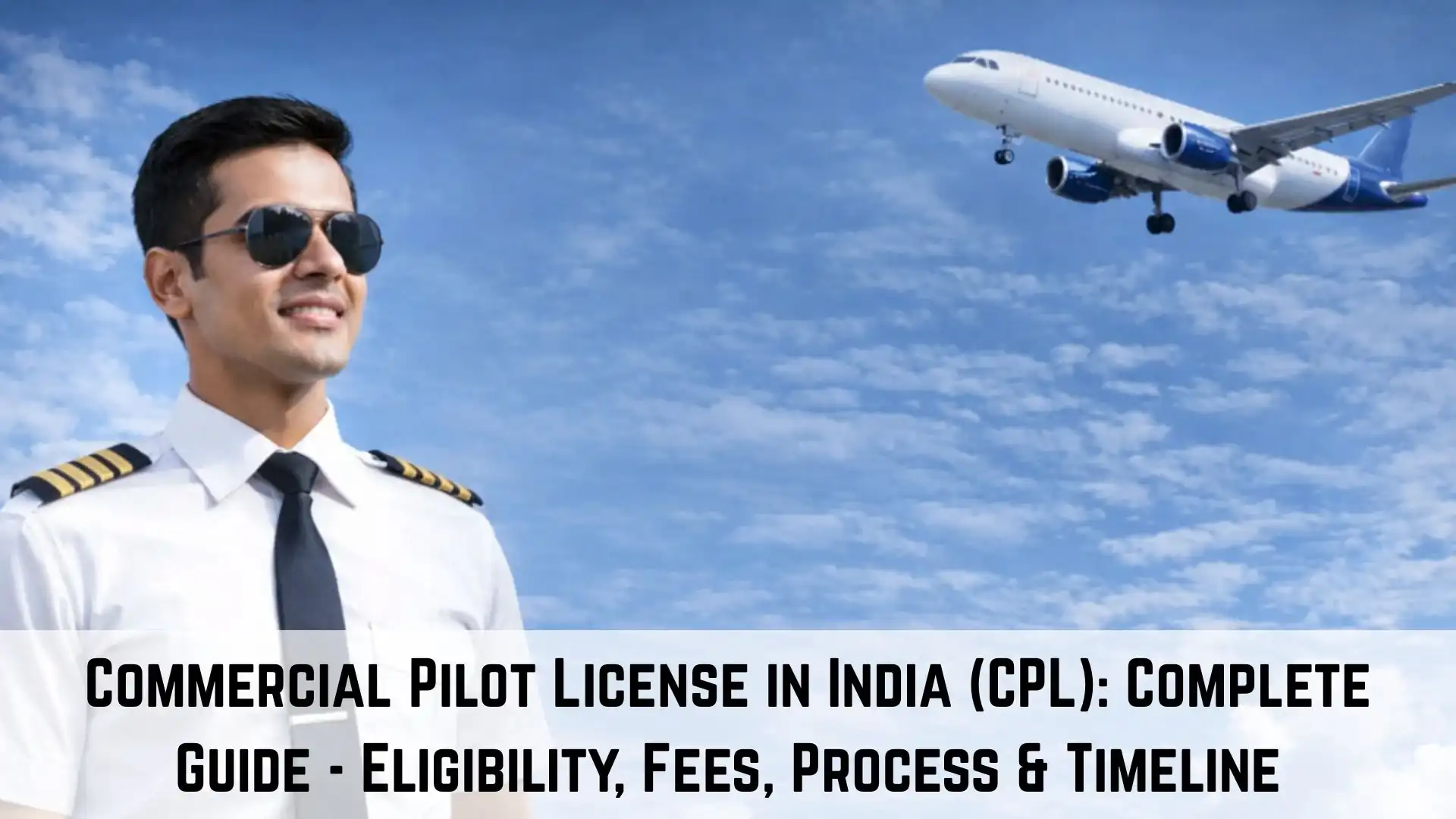
Becoming a commercial pilot is a dream career for many aviation enthusiasts in India. The thrill of flying aircraft, traveling across the world, and working in one of the most respected professions makes aviation an attractive career option. To fly professionally and earn as a pilot, you must obtain a Commercial Pilot License (CPL).
In India, the CPL is regulated by the Directorate General of Civil Aviation (DGCA), which sets the standards for pilot training, examinations, medical fitness, and licensing.
This detailed guide explains everything you need to know about the Indian CPL License — including eligibility, training process, medical requirements, exams, costs, career opportunities, and challenges.
What is a CPL License?
A Commercial Pilot License (CPL) is a professional aviation license that allows a pilot to fly aircraft for compensation or hire.
Unlike a Private Pilot License (PPL), which is mainly for recreational flying, a CPL enables pilots to work professionally in the aviation industry.
With a CPL, a pilot can work as:
-
Airline First Officer
-
Charter Pilot
-
Cargo Pilot
-
Flight Instructor
-
Corporate Jet Pilot
-
Aerial Survey Pilot
-
Air Ambulance Pilot
The CPL is one of the most important milestones in a pilot’s aviation career.
Role of DGCA in India
In India, all pilot licenses are issued and regulated by the Directorate General of Civil Aviation.
DGCA is responsible for:
-
Approving flying schools
-
Conducting pilot examinations
-
Issuing pilot licenses
-
Setting medical standards
-
Regulating aviation safety
Any pilot training undertaken in India must comply with DGCA regulations.
Eligibility Criteria for CPL in India
To apply for a CPL in India, candidates must meet specific eligibility requirements.
Age Requirement
-
Minimum age: 18 years
Educational Qualification
Candidates must have completed:
-
10+2 (Higher Secondary Education)
-
Physics and Mathematics as compulsory subjects
Students without Physics and Mathematics in school can complete these subjects through approved open schooling systems.
Medical Fitness
Medical fitness is extremely important in aviation.
Candidates must obtain:
-
DGCA Class 2 Medical
-
Later upgraded to DGCA Class 1 Medical
The medical examination includes:
-
Vision tests
-
Hearing tests
-
ECG
-
Blood tests
-
General physical examination
Pilots must maintain strict medical fitness standards throughout their careers.
Types of Pilot Licenses in India
Before obtaining a CPL, pilots usually progress through multiple stages.
1. Student Pilot License (SPL)
This is the first stage of pilot training.
It allows students to begin practical flying training under supervision.
2. Private Pilot License (PPL)
A PPL allows non-commercial flying.
Pilots can fly privately but cannot earn money from flying.
3. Commercial Pilot License (CPL)
This is the professional license required for airline and commercial operations.
CPL Training Process in India
The CPL training journey consists of both theoretical and practical training.
Step 1: Ground School Training
Ground school focuses on aviation theory subjects.
Students study:
-
Air Navigation
-
Meteorology
-
Air Regulations
-
Technical General
-
Technical Specific
-
Radio Telephony (RTR)
Ground school builds the foundation for safe and professional flying.
Step 2: Flying Training
Practical flying training is conducted at DGCA-approved flying schools.
Training includes:
-
Dual flying with instructors
-
Solo flying
-
Cross-country flights
-
Night flying
-
Instrument flying
-
Emergency procedures
Students gradually develop flying confidence and operational skills.
Minimum Flying Hours Required
According to DGCA requirements, candidates generally need:
-
200 total flying hours for CPL issuance
These hours include:
-
Solo flying
-
Cross-country flying
-
Instrument time
-
Night flying
The exact breakdown may vary according to current DGCA regulations
Flight Training Duration
The time required to complete CPL training depends on several factors.
Typically:
-
18 months to 3 years
Factors affecting duration:
-
Weather conditions
-
Aircraft availability
-
Instructor availability
-
DGCA exam schedules
-
Student performance
Cost of CPL Training in India
Pilot training is expensive and requires significant financial planning.
Approximate CPL Training Cost
In India, CPL training may cost between:
-
₹35 lakh to ₹60 lakh or more
Costs include:
-
Flying hours
-
Ground school
-
Hostel accommodation
-
DGCA exam fees
-
Medicals
-
Uniforms
-
Study materials
-
Simulator training
Costs vary depending on the flying school and aircraft type.
Choosing the Right Flying School
Selecting the right academy is one of the most important decisions.
Important Factors to Consider
DGCA Approval
Ensure the academy is DGCA-approved.
Fleet Size
More aircraft usually means better training continuity.
Instructor Quality
Experienced instructors improve learning quality.
Weather Conditions
Good weather enables consistent flying.
Infrastructure
Simulators, classrooms, and maintenance facilities matter.
Safety Record
Safety standards should be a top priority.
Type Rating After CPL
After obtaining a CPL, pilots usually require a Type Rating on a specific aircraft.
Examples:
-
Airbus A320
-
Boeing 737
Type rating includes:
-
Simulator training
-
Aircraft systems training
-
Line-oriented flight training
This prepares pilots to operate airline aircraft professionally.
Career Opportunities After CPL
A CPL opens multiple aviation career paths.
Airline Pilot
The most popular career path.
Pilots begin as:
-
Junior First Officers
-
First Officers
Eventually progressing to:
-
Senior First Officer
-
Captain
Charter Aviation
Pilots fly private charter aircraft and business jets.
Cargo Operations
Cargo airlines require professional pilots for freight transport.
Flight Instructor
Pilots can become Certified Flight Instructors (CFIs) to train future pilots.
Government and Specialized Aviation
Opportunities may exist in:
-
State aviation departments
-
Air ambulance services
-
Survey operations
-
Aerial photography
Salary of Commercial Pilots in India
Pilot salaries vary depending on experience and airline.
Approximate Salary Range
Entry-Level First Officer
₹1.5 lakh to ₹4 lakh per month
Experienced First Officer
₹4 lakh to ₹7 lakh per month
Captain
₹8 lakh to ₹15 lakh+ per month
International operations may offer higher compensation packages.
Advantages of Becoming a Pilot
Prestigious Career
Pilots are highly respected professionals.
Travel Opportunities
Pilots travel nationally and internationally.
Attractive Salary
Experienced pilots can earn excellent salaries.
Dynamic Work Environment
Every flight presents unique experiences.
Career Growth
Pilots can progress to command and management roles.
Future of Aviation in India
India is one of the fastest-growing aviation markets in the world.
Factors driving growth include:
-
Rising passenger demand
-
Expansion of regional connectivity
-
Growth of low-cost airlines
-
Increasing airport infrastructure
-
Fleet expansion by Indian airlines
This growth is expected to increase demand for qualified commercial pilots in the coming years.
Tips for Aspiring CPL Students
Research Thoroughly
Understand the training process before investing.
Stay Medically Fit
Medical fitness is crucial in aviation.
Build Strong Fundamentals
Focus on navigation, meteorology, and technical knowledge.
Improve English Communication
English proficiency is essential in aviation.
Maintain Discipline
Professionalism and consistency are important qualities.
Conclusion
Obtaining a Commercial Pilot License in India is a challenging yet highly rewarding journey. It requires dedication, financial planning, discipline, and passion for aviation.
From passing DGCA exams and completing flying hours to obtaining medical clearances and type ratings, every step prepares aspiring pilots for a professional aviation career.
As India’s aviation industry continues to expand, opportunities for commercial pilots are expected to grow significantly. For individuals passionate about flying and willing to commit to the rigorous training process, a CPL can open the door to an exciting and prestigious global career in aviation.